
A severely cracked windshield demands immediate professional attention. Operating a vehicle with compromised auto glass puts you and your passengers at immense risk. Residents of Rock Hill, SC, face daily road hazards along busy interstates and local streets. A stray rock tossed by a commercial truck quickly creates a deep impact point. Changes in temperature cause that small chip to expand into a massive spiderweb fracture across your line of sight. Relying on professional windshield replacement services guarantees your vehicle regains its original factory safety standards. This guide details exactly when a complete replacement becomes necessary, the differences between auto glass grades, strict installation protocols, mandatory ADAS calibration requirements, and the profound impact these procedures have on passenger safety.
Table of Contents
What Indicates a Complete Windshield Replacement Is Required?
Technicians evaluate auto glass damage based on size, depth, and location. Minor chips often qualify for a quick resin repair. Severe damage requires removing the entire pane of glass and installing a brand-new unit.
Size and Length of the Damage
A general rule within the auto glass industry dictates that cracks longer than a standard dollar bill require a full replacement. Extremely long fractures weaken the entire structure of the glass pane. Attempting to repair a massive crack leaves the windshield vulnerable to shattering upon a secondary impact.
Depth of the Impact
Modern windshields consist of two distinct layers of glass fused together by a strong polyvinyl butyral (PVB) inner layer. This plastic interlayer prevents the glass from shattering into the cabin. If a rock strikes the windshield hard enough to penetrate the outer layer of glass and puncture the PVB layer, a replacement becomes mandatory. The structural integrity of the plastic interlayer cannot be repaired once pierced.
Location of the Damage
Damage occurring directly in the motorist’s primary line of sight—often referred to as Zone A—necessitates a complete replacement. Cured resin used in repairs can leave a slight visual distortion. Any distortion in the field of vision creates a severe safety hazard. Cracks extending to the outer edges of the windshield also demand replacement. Edge cracks compromise the factory urethane seal, allowing water and air to enter the cabin while drastically reducing the structural strength of the vehicle frame.
Understanding Auto Glass Options: OEM vs. OEE
Selecting the correct replacement glass plays a major role in restoring your vehicle’s safety and comfort. Professional auto glass shops offer different tiers of replacement glass.
Original Equipment Manufacturer (OEM) Glass
OEM glass comes directly from the same manufacturer that supplied the original windshield for your specific vehicle make and model. This glass features the identical thickness, curvature, and exact acoustic properties as the factory original. Automakers demand strict quality control for OEM glass. Choosing OEM glass guarantees a perfect fit within the vehicle’s pinch weld, preventing wind noise and water leaks.
Original Equipment Equivalent (OEE) Glass
OEE glass, sometimes called aftermarket glass, is manufactured by companies that do not directly supply the automaker. High-quality OEE glass meets the exact Department of Transportation safety standards as OEM glass. The curvature and thickness remain highly accurate. Reputable auto glass shops rely on top-tier OEE manufacturers to provide safe, cost-effective options for vehicle owners.
Avoiding Low-Quality Aftermarket Glass
Bargain glass shops sometimes use inferior aftermarket glass to cut costs. Low-quality glass often suffers from optical distortion, causing the road ahead to appear wavy. This distortion causes commuter fatigue and headaches. Inferior glass may lack the acoustic dampening properties found in factory glass, resulting in a remarkably loud cabin at highway speeds. Always verify your chosen auto glass shop uses OEM or high-grade OEE materials.
The Exact Windshield Replacement Process
Replacing a windshield involves much more than simply swapping out a piece of glass. Certified technicians follow a rigid, step-by-step procedure to protect the vehicle and guarantee a watertight seal.
Pre-Installation Inspection and Vehicle Protection
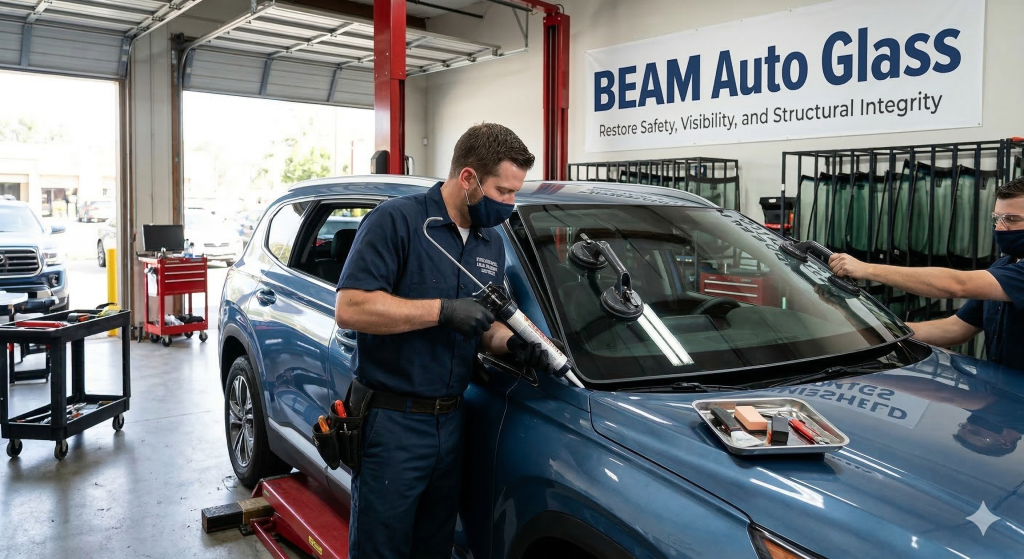
Technicians begin by thoroughly inspecting the vehicle. They document existing scratches on the paint and verify the functionality of the wipers, washer fluid nozzles, and interior electronics. The team drapes heavy protective covers over the steering wheel, dashboard, and front seats. This prevents shattered glass fragments and chemical adhesives from damaging the interior upholstery.
Removing the Old Glass
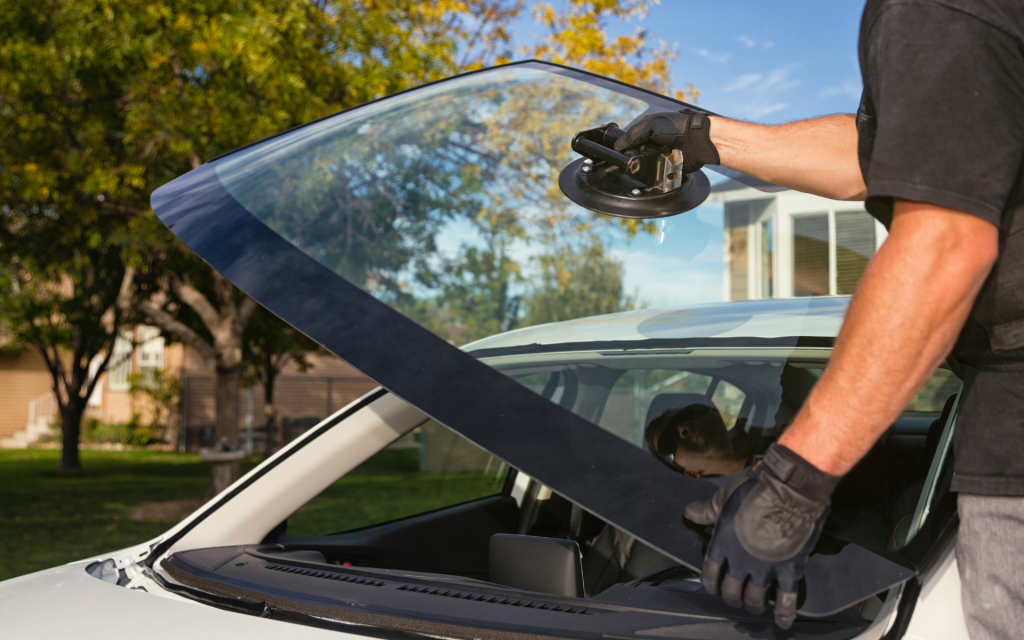
The technician carefully removes the windshield wipers, exterior plastic cowling, and any decorative molding. Using specialized cutting knives and heavy-duty wire systems, the technician slices through the old urethane adhesive bonding the broken glass to the vehicle frame. The old windshield is then lifted away using heavy-duty suction cups.
Preparing the Pinch Weld
The metal frame holding the glass is known as the pinch weld. The technician trims the remaining old adhesive down to a thin, uniform layer, creating a flat base for the new chemical bond. Any rust discovered on the bare metal must be sanded down and treated. The technician applies a specialized chemical primer to the bare metal and the edges of the new glass. This primer promotes maximum adhesion and prevents future rust formation.
Applying Advanced Urethane Adhesive
Technicians use a caulking gun to apply a thick, continuous v-shaped bead of fresh urethane adhesive around the entire perimeter of the pinch weld. The exact height and width of this urethane bead determine the strength of the final bond.
Setting the New Glass
Using mechanical lifting devices or assisted suction cups, technicians lower the new windshield perfectly into the frame. The glass is gently pressed into the wet urethane to create an airtight, watertight seal. The technician reinstalls the wipers, cowl, and exterior trim pieces.
The Minimum Curing Time
Federal safety standards dictate a strict minimum curing time for every windshield replacement. The urethane adhesive requires a specific amount of time to harden. Operating the vehicle before this time elapses causes the glass to shift within the frame. A shifted windshield breaks the waterproof seal and severely compromises passenger safety during a collision. Professional shops enforce this curing period rigorously.
Advanced Assistance Systems (ADAS) and Calibration
Modern vehicles rely heavily on Advanced Assistance Systems (ADAS). These intelligent safety features include lane departure warnings, automatic emergency braking, adaptive cruise control, and pedestrian detection.
The Role of the Windshield Camera
The ADAS network depends entirely on a forward-facing camera mounted directly behind the rearview mirror. This camera looks through the windshield to read lane markings and measure the distance to the vehicle ahead. Replacing the windshield alters the camera’s exact angle, height, and pitch. A misalignment of a single millimeter causes the camera to miscalculate distances by several feet at highway speeds.
The Risks of Skipping Calibration
Failing to calibrate the ADAS camera after a windshield replacement creates extreme road hazards. The lane keep assist system might forcefully steer your vehicle into oncoming traffic, believing you are drifting out of your lane. The automatic emergency braking system could slam on the brakes while you travel on a clear highway, causing a rear-end collision. Proper calibration is an absolute necessity.
Static Calibration Procedures
Static calibration takes place inside a controlled auto glass shop environment. Technicians park the vehicle on a perfectly level concrete floor. They position exact, laser-measured targets at specific distances and heights in front of the vehicle bumper. A diagnostic computer plugs into the vehicle’s OBD-II port, forcing the camera to read the targets and reset itself to exact factory specifications. This requires controlled indoor lighting and exact tire pressure.
On-Road Calibration Procedures
On-Road calibration requires the vehicle to learn its surroundings on the highway. The technician plugs the diagnostic scanner into the vehicle and travels at specific, sustained speeds on well-marked routes. The camera reads the painted lane lines and calibrates itself during the trip. Certain vehicle manufacturers require a combination of both static and on-road calibration to guarantee complete system accuracy.
How Windshield Replacement Protects Passengers
A properly installed windshield acts as a primary safety restraint system, working directly with the seatbelts and airbags.
Structural Integrity and Roof Crush Resistance
The windshield provides up to 60 percent of the cabin’s structural strength during a rollover accident. If a vehicle flips, the rigid glass prevents the metal roof from collapsing inward and crushing the occupants. A poorly installed windshield will pop out of the frame under extreme pressure, completely eliminating this vital structural support.
Proper Passenger Airbag Deployment
When a severe frontal collision occurs, the passenger-side airbag deploys upward at incredible speeds. The airbag bounces directly off the inside of the windshield before expanding backward to cushion the passenger. The urethane adhesive holding the windshield must withstand the explosive force of the airbag. If the adhesive fails, the windshield flies out of the car, and the airbag deploys uselessly outside the vehicle, leaving the passenger completely unprotected against the dashboard.
Preventing Occupant Ejection
During high-speed crashes, the immense force throws passengers forward. A structurally sound, properly cured windshield acts as a barrier, preventing occupants from being ejected from the vehicle. Surviving a severe crash depends entirely on the passengers remaining securely inside the cabin.
The Hidden Dangers of Delaying Windshield Replacement
Ignoring a cracked windshield invites unnecessary risks and escalating costs.
Rapidly Spreading Cracks
Rock Hill experiences intense summer heat and sudden winter freezes. Expanding and contracting glass causes tiny chips to spiderweb across the entire windshield in a matter of hours. A sprawling crack directly in your line of sight severely delays your reaction time to braking vehicles or crossing pedestrians.
Water Leaks and Electrical Damage
A cracked windshield or a failing urethane seal allows rainwater to seep into the dashboard. Modern dashboards house sensitive computers, wiring harnesses, and digital displays. Water intrusion causes severe electrical shorts, leading to expensive mechanical repairs.
Law Enforcement Citations
Police officers actively issue traffic citations for vehicles operated with obstructed vision. A severely cracked windshield violates state safety laws and will cause your vehicle to fail mandatory safety inspections. Replacing the glass promptly saves you from expensive tickets and keeps your record clean.
Navigating Auto Insurance for Windshield Replacement
Many vehicle owners delay necessary glass replacement due to fears of high out-of-pocket expenses.
Full-Coverage Auto Insurance Policies
Most full-coverage auto insurance policies cover auto glass repair and complete replacement. South Carolina law provides favorable conditions for motorists carrying full-coverage policies. Many insurance providers waive the deductible entirely for windshield replacements, making the service completely free out-of-pocket for the policyholder.
Handling the Claims Process
A professional auto glass shop handles the entire insurance claims process directly. The shop staff contacts your insurance provider, files the necessary paperwork, and verifies your exact coverage limits. This direct communication eliminates confusing administrative hurdles. The shop bills the insurance company directly, allowing you to focus on getting your vehicle back on the road safely without draining your bank account.
Choosing the Right Auto Glass Professionals in Rock Hill, SC
Selecting the correct technicians to perform your windshield replacement makes a massive difference in the longevity and safety of the installation.
Local Expertise Versus National Chains
Choosing a dedicated, local auto glass shop in Rock Hill, SC, means trusting technicians who prioritize exact workmanship over rushing through high volumes of daily appointments. Local shops rely on community reputation, guaranteeing they stand behind their labor with strong warranties.
The Auto Glass Safety Council
Always seek out technicians certified by the Auto Glass Safety Council (AGSC). This certification proves the technicians follow strict federal safety guidelines, use approved urethane adhesives, and understand the precise requirements for advanced ADAS calibration.
The Controlled Shop Environment
While mobile repair units offer convenience, a complete windshield replacement demands a controlled environment. High humidity, sudden rainstorms, and extreme temperatures negatively affect the chemical curing process of the urethane adhesive. Uneven surfaces cause the vehicle frame to twist slightly during installation. Bringing your vehicle directly to a professional shop guarantees level floors, controlled climate conditions, and access to heavy-duty calibration equipment.
Schedule Your Windshield Replacement Today
Do not compromise the safety of your family by operating a vehicle with a damaged windshield. A compromised layer of auto glass puts everyone inside the cabin at severe risk during a sudden collision. Our certified technicians provide exact replacements, using strictly OEM-quality glass, and perform exact ADAS calibrations to restore your vehicle entirely to factory safety standards. Delaying this critical repair only invites rapidly spreading cracks and immediate road hazards. We handle the entire insurance claims process directly, removing financial stress and administrative headaches. You receive direct communication, exact appointment scheduling, and dependable workmanship from local experts who care about your family. Protect your passengers on Rock Hill roads against flying debris and unpredictable highway conditions. Stop risking your daily commute. Contact BEAM Auto Glass right now to book your professional windshield replacement appointment. Regain complete optical clarity, secure structural strength, and travel with absolute confidence knowing your vehicle is entirely safe.


