

Driving through Rock Hill, SC, with a stuck car window creates immediate frustration. A window stuck in the down position exposes your vehicle interior to sudden South Carolina thunderstorms, extreme summer heat, and potential theft. A window stuck in the up position turns simple tasks, like paying a toll or ordering at a drive-thru, into massive inconveniences. The mechanical assembly responsible for moving your door glass up and down is called the window regulator. Over time, these mechanical parts undergo severe stress, leading to inevitable mechanical failure. Relying on professional window regulator replacement services guarantees your vehicle regains smooth, secure window operation. This guide explains exactly how window regulators function, the exact signs of impending failure, the critical differences between complete replacement and minor repairs, and why advanced interior door work requires a certified technician.
Table of Contents
What Is a Window Regulator and How Does It Work?
A window regulator is the hidden mechanical assembly located entirely inside your vehicle’s door panel. This assembly mounts directly to the bottom of your door glass and physically pushes the window up or pulls it down along a set of metal tracks.
The Two Primary Types of Window Regulators
Automakers typically use one of two distinct mechanical designs to operate vehicle windows.
Cable-Type Regulators: Modern vehicles heavily favor cable-driven systems to save weight and space inside the door cavity. This system operates similarly to bicycle brakes. A small electric motor spins a spool, pulling a thick metal wire (a Bowden cable) through a series of plastic pulleys. The cable attaches to a carriage holding the glass. As the motor pulls the cable, the carriage slides up and down the vertical metal tracks.
Scissor-Type Regulators: Older vehicles and heavy-duty trucks often feature scissor-type regulators. This heavy metal mechanism resembles a pair of scissors opening and closing. The central pivot point is driven by a large metal gear mechanism attached to the power window motor. As the motor turns the main gear, the metal arms expand to push the glass upward or contract to lower the glass.
The Power Window Motor Assembly
In manual window systems, a hand crank provides the physical force to move the regulator. In modern power window systems, a small electric motor provides this force. Depending on the vehicle make and model, the power window motor and the window regulator are either manufactured as a single, combined unit or designed as two separate, detachable components. Understanding this distinction becomes critical during the diagnostic phase.
What Are the Common Signs of Window Regulator Failure?
Window regulators rarely fail without warning. Identifying the early symptoms of mechanical fatigue saves you from dealing with a window that suddenly falls open on a busy highway.
The Window Falls Inside the Door Panel
The most severe symptom occurs when the window glass suddenly drops completely down into the door frame and refuses to come back up. In cable-driven systems, this drop indicates that the main metal tension cable has snapped entirely. In scissor-style systems, it means the main structural mounting bracket has completely detached.
Grinding, Clicking, or Clunking Noises
Unusual sounds coming from inside the door panel serve as an immediate warning. A loud grinding sound usually means the plastic gears inside the window motor are stripped and are skipping teeth. A sharp clicking or snapping sound often points to a frayed metal cable getting caught inside the pulley system. Ignoring these noises rapidly leads to complete mechanical failure.
The Window Moves Unusually Slow or Crooked
If your window struggles to roll up, moves at a fraction of its normal speed, or tilts forward while moving, the regulator is failing. A crooked window indicates that the regulator carriage has broken on one side, forcing the motor to push the glass unevenly. A sluggish window means the metal tracks are completely dry or bent, forcing the power window motor to work twice as hard to push the glass upward.
The Window Button Fails to Engage the Motor
Pressing the power window switch and hearing absolutely nothing is a common problem. While this sometimes points to a bad electrical switch, it frequently means the window motor itself has burned out from the strain of pushing a failing regulator assembly.
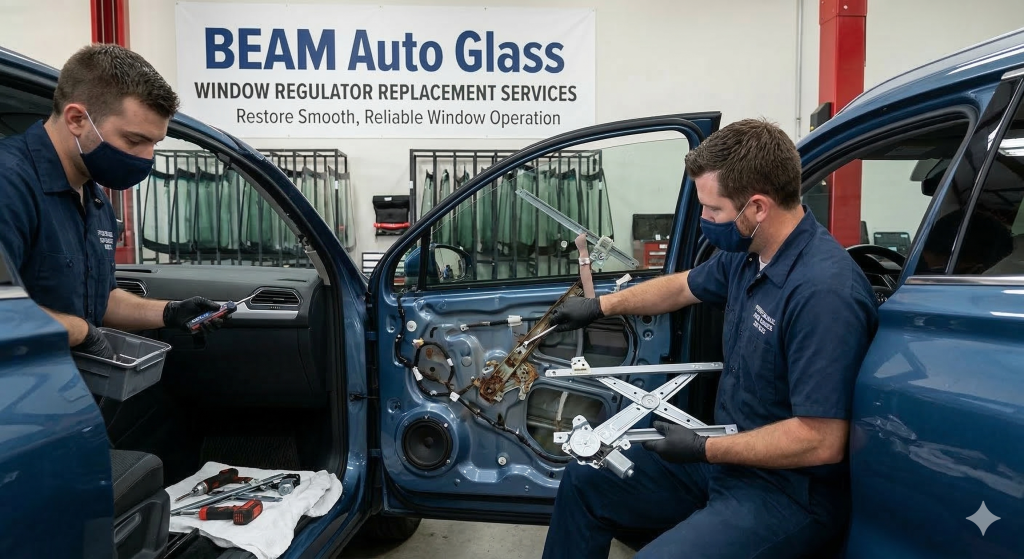
Window Regulator Replacement vs. Repair: Which Do You Need?
Vehicle owners frequently wonder if a broken window mechanism can simply be repaired rather than entirely replaced. The answer depends heavily on the specific point of failure.
When Complete Replacement is Mandatory
The vast majority of window regulator failures require a complete assembly replacement. If the metal tension cable frays or snaps, it cannot be spliced back together safely. If the plastic pulleys holding the tension cables shatter, they cannot be glued or individually replaced. Attempting to patch a broken cable or cracked pulley causes the entire system to fail again within a matter of days. Installing a completely new regulator assembly is the only safe, permanent solution.
When Minor Repair is an Option
Sometimes, the regulator itself remains in perfect condition, but surrounding components cause the window to malfunction. If the glass simply popped out of the regulator carriage clips, a technician can reseat the glass and tighten the mounting bolts. If the metal tracks are severely binding due to heavy dirt and pollen buildup, a thorough cleaning and application of specialized silicone lubricant will restore smooth operation without requiring a new regulator.
Diagnosing the Switch, the Motor, and the Regulator
Proper diagnostics prevent you from buying unnecessary parts. If the window refuses to move, a professional technician uses a digital multimeter to test the electrical current at the door switch. If the switch sends power, the technician tests the wiring harness directly at the window motor. If the motor receives strong voltage but refuses to spin, the motor requires replacement. If the motor spins freely but the window does not move, the mechanical regulator is entirely broken.
The Risks of Ignoring a Failing Window Regulator
Postponing a necessary window regulator replacement creates immediate physical and financial risks for the vehicle owner.
Security Threats and Theft Vulnerability
A window stuck open, even just an inch, acts as a massive invitation for theft. Criminals easily pry a loose window downward to unlock the vehicle. Securing your vehicle in a public parking lot in Rock Hill becomes impossible when the window regulator fails to hold the glass firmly in the closed position.
Interior Damage from Weather and Rain
South Carolina experiences intense, sudden rainstorms. A broken window regulator allows rainwater to pour directly into the vehicle interior. Water intrusion destroys leather seats, causes intense mold growth in the carpets, and ruins sensitive electronics located inside the door panels and dashboard.
Air Conditioning Inefficiency and Commuter Discomfort
Driving with a window permanently stuck open during the sweltering heat of summer completely defeats your vehicle’s air conditioning system. The cabin refuses to cool down, creating an incredibly uncomfortable daily commute. Furthermore, the wind noise generated at highway speeds makes listening to the radio or holding a conversation impossible.
Why Professional Window Regulator Replacement Prevents Repeat Breakdowns
Replacing a window regulator is a highly complex mechanical task. Attempting a DIY repair often leads to broken interior panels, shattered glass, and faulty wiring. Relying on a professional technician provides distinct advantages.
Accurate Diagnostics Save Time
Modern car doors house complex electrical networks, including side-impact airbag sensors, central locking actuators, and premium stereo speakers. A professional technician accurately isolates the exact cause of the window failure without blindly guessing. This targeted diagnostic approach prevents you from paying for a new motor when the only issue was a corroded electrical ground wire.
Complex Door Panel Removal
Gaining access to the window regulator requires removing the interior door trim panel. Automakers use hidden screws, delicate plastic retaining clips, and tight compression fittings to hold the panel in place. Pulling on the panel incorrectly snaps the plastic clips, leaving the door panel loose and rattling permanently. Professional technicians possess the exact specialized trim removal tools required to pull the panel off perfectly intact.
Handling the Vapor Barrier and Electronics
Behind the interior trim panel sits a plastic weather shield, commonly called a vapor barrier. This barrier prevents moisture inside the door cavity from rotting the interior cabin materials. Technicians carefully peel back this barrier without tearing it. They then carefully unclip the sensitive wiring harnesses connected to the power mirrors and window switches without bending the delicate metal connector pins.
Preventing Glass Shattering During Installation
Removing a broken regulator requires detaching it directly from the heavy door glass. During this process, the glass is completely unsupported. A professional technician uses high-strength industrial suction cups or heavy-duty specialized tape to secure the glass firmly to the top of the door frame. If an amateur drops the glass inside the metal door cavity, the window shatters instantly, turning a standard mechanical repair into a massive glass cleanup and replacement job.
Addressing Window Regulator Compatibility Issues
Sourcing the correct window regulator for your specific vehicle is surprisingly complicated. Purchasing the wrong part completely stalls the repair process.
Complex Variations Within the Same Model Year
Automakers frequently change regulator designs midway through a production year. A regulator built for a four-door sedan version of a vehicle will not fit the two-door coupe version of the exact same vehicle. The mounting bolt patterns and track lengths differ drastically. A professional auto glass shop cross-references your vehicle’s exact Vehicle Identification Number (VIN) to source the precise assembly required.
OEM vs. Aftermarket Regulator Assemblies
Just like auto glass, regulators come in Original Equipment Manufacturer (OEM) and aftermarket variations. High-quality aftermarket assemblies meet all factory specifications and restore perfect operation. Cheap, low-grade aftermarket regulators use inferior plastic pulleys that shatter under high heat. A reputable shop sources assemblies featuring reinforced metal brackets and high-tension cables that withstand daily heavy usage.
Exact Pin Connectors and Voltage Requirements
When replacing a combined regulator and motor assembly, the electrical connectors must match perfectly. A factory motor might feature a 6-pin connector for an “auto-down” window feature, while a cheap replacement part only features a 2-pin connector. Installing the wrong motor eliminates your automatic window functions. Professional technicians verify all voltage requirements and wiring schematics before completing the installation.
Why Choose Local Rock Hill, SC Technicians?
Choosing a dedicated local shop in Rock Hill, SC, means trusting a team that values long-term community relationships over quick, high-volume transactions.
Understanding Local Climate Impacts
Local technicians understand exactly how the heavy South Carolina humidity and dense spring pollen affect window tracks. When replacing a regulator, a local technician takes the extra time to thoroughly clean the rubber window gaskets and apply proper lubrication, preventing the thick local pollen from immediately binding the new regulator assembly.
Guaranteed Workmanship and Accountability
National chains frequently assign complex door interior repairs to entry-level technicians. A local, specialized shop relies heavily on experienced technicians who perform this exact job daily. You receive direct communication, honest diagnostics, and a shop that stands firmly behind its labor with strong warranties. If an issue arises, you speak directly to the person who performed the work, not an anonymous corporate call center.
Schedule Your Window Regulator Replacement Today
Do not tolerate the massive inconvenience and high security risks of a stuck or completely broken vehicle window. Leaving your vehicle exposed to extreme weather and potential theft causes entirely avoidable stress. Our highly trained technicians provide exact mechanical diagnostics, precise interior panel removal, and secure installation of high-quality window regulator assemblies. We handle the complex interior wiring and heavy glass adjustments so you do not have to. Protect your vehicle interior and restore your daily driving comfort. Stop struggling with manual lifting or driving with loud, open windows on the highway. Contact BEAM Auto Glass right now to book your professional window regulator replacement appointment. Reclaim the smooth, secure, and fully functional window operation your vehicle was designed to deliver.


